Updated November 2026
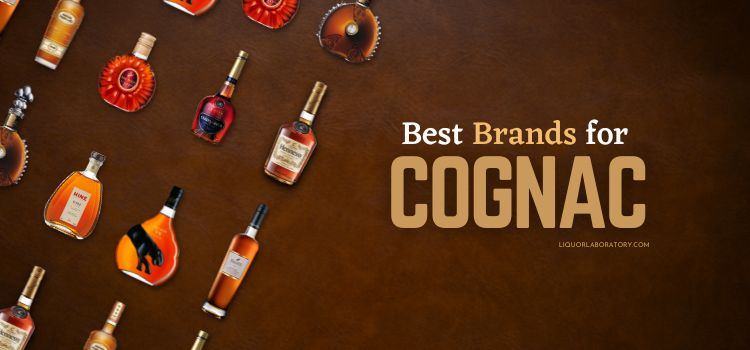
The best cognac brands to know are the four big houses, Hennessy (founded 1765), Rémy Martin (1724), Martell (1715) and Courvoisier, plus respected smaller houses such as Pierre Ferrand, Frapin, Hine, Camus and Delamain. The right one for you depends less on the logo than on the age grade (VS, VSOP or XO) and the cru the grapes came from.
Every bottle on this list is true Cognac: grape brandy made in a defined region of southwest France under French appellation rules. Below, you will find who makes what, who owns each house today, and how to read a cognac label so you can choose with confidence. For the wider brandy family, start with our Brandy Guide.
What makes a brandy a cognac
Cognac is a protected name. In the United States, federal labeling rules define Cognac as “grape brandy distilled exclusively in the Cognac region of France,” entitled to the name under French law (27 CFR § 5.145). A California or Spanish brandy can be excellent, but it cannot carry the word Cognac.
The French appellation, in place since 1936, adds production rules. Producers distill white wine, made mostly from Ugni Blanc grapes, twice in copper Charentais pot stills, and distillation for each harvest must finish by March 31. The spirit then ages in oak. If you want the full grape-to-glass story, read our explainer on what cognac is made from.
VS, VSOP and XO: the age grades
The letters on the label tell you the minimum age of the youngest eau-de-vie in the blend. Most blends contain far older spirit, but the rule sets the floor.
- VS (Very Special): at least 2 years in oak. Bright, fruity and built for mixing.
- VSOP (Very Superior Old Pale): at least 4 years in oak. Rounder, with more vanilla and spice. A good sipping and cocktail middle ground.
- XO (Extra Old): at least 10 years in oak. The minimum rose from 6 to 10 years on April 1, 2018. Expect dried fruit, leather, nuts and a long finish.
Because these are minimums, two XOs from different houses can taste very different. A house that blends 20-year-old spirit into its XO will taste older than one that sits near the 10-year line.
The six crus and “Fine Champagne”
The Cognac region divides into six growth areas, or crus, based on soil and climate:
- Grande Champagne: chalky soils; long-lived, floral, elegant spirit.
- Petite Champagne: similar chalk, slightly less intense.
- Borderies: the smallest cru; known for a violet-like, nutty character.
- Fins Bois: the largest cru; rounder and quicker to mature.
- Bons Bois
- Bois Ordinaires (sometimes called Bois à Terroirs)
“Champagne” here refers to the chalky soil, not the sparkling wine. A cognac labeled Fine Champagne blends Grande and Petite Champagne eaux-de-vie, with at least 50% from Grande Champagne. A label that names a single cru, such as “Grande Champagne,” means all of the grapes came from that area. Our guide to the regions of cognac maps them in more detail.
The big four cognac houses
Hennessy
Richard Hennessy, an Irish officer living in France, founded the house in 1765. Maurice Hennessy created Hennessy X.O in 1870, and LVMH, through Moët Hennessy, owns the brand today. Hennessy’s V.S, V.S.O.P and X.O are bottled at 80 proof. Compare the range in our best Hennessy cognac guide.
Rémy Martin
Rémy Martin dates to 1724 and focuses on the two Champagne crus. The house launched its VSOP Fine Champagne in 1927 and introduced Louis XIII, its prestige blend, in 1874. Rémy Martin belongs to Rémy Cointreau, formed by a 1990 merger with Cointreau. Read more on our Rémy Martin page.
Martell
Jean Martell founded Martell in the town of Cognac in 1715, making it the oldest of the big four. Pernod Ricard owns it today. See our Martell guide for the lineup.
Courvoisier
Courvoisier traces its roots to Emmanuel Courvoisier’s business near Paris and moved to Jarnac in 1828; the brand commonly gives 1835 as its founding date. Its long association with Napoleon explains the silhouette on the bottle. After years under Beam Suntory, Courvoisier passed to Campari Group, which completed the purchase on May 1, 2024.
Smaller houses worth knowing
Pierre Ferrand
Alexandre Gabriel and a partner bought the Pierre Ferrand estate and distillery in Segonzac in 1989. Gabriel now owns Maison Ferrand and serves as its master blender. The founders started with access to aged Grande Champagne stocks, and the house remains a go-to name for Grande Champagne cognac. Maison Ferrand also ages its Planteray (formerly Plantation) rums in its cognac barrels.
Frapin
The Frapin family has grown grapes in the region since 1270 and has distilled for some 20 generations. The estate in Segonzac covers about 240 hectares of vineyards, all in Grande Champagne, so every Frapin cognac comes from a single cru.
Hine
Thomas Hine, an Englishman from Dorset, gave his name to this Jarnac house, founded in 1763. Hine received a royal warrant from Queen Elizabeth II in 1962 and is one of the few houses that has kept stocks of single-vintage cognacs over the long term.
Camus
Jean-Baptiste Camus created the brand in 1863, and the fifth generation, led by Cyril Camus, runs it today. Camus calls itself the largest independent family-owned cognac house. It is known for its Borderies estate cognacs, including the Borderies XO.
Delamain
Delamain, founded in Jarnac in 1824, uses only Grande Champagne eaux-de-vie and sells only XO grades and older. Its flagship, Pale & Dry XO, is a blend averaging about 25 years. The Bollinger group became majority shareholder in 2017.
How to choose the right cognac
- For a Sidecar or cognac and ginger ale: a VS or VSOP from any of the big four works well. See what to mix with cognac.
- For your first neat pour: try a VSOP, ideally Fine Champagne, before you step up. Our best cognac for beginners page covers starter bottles.
- For a gift or special occasion: pick an XO and compare houses with our best XO cognac guide.
- For a sense of place: choose a single-cru house such as Frapin or Delamain (Grande Champagne) or a Camus Borderies bottling.
Check the label for proof, too. Most cognac is bottled at 80 proof (40% ABV), but some bottlings run higher, and the label is the final word.
Frequently asked questions
What is the most popular cognac brand?
Hennessy is the most widely recognized cognac name, and its parent LVMH describes it as the world leader in cognac. Rémy Martin, Martell and Courvoisier make up the rest of the big four.
What is the oldest cognac house?
Among the major houses, Martell is the oldest, founded in 1715. The Frapin family’s ties to the region go back to 1270, though as grape growers before they became distillers.
Is cognac the same as brandy?
All cognac is brandy, but not all brandy is cognac. US rules reserve the word for grape brandy distilled in the Cognac region of France (27 CFR § 5.145). See brandy vs whiskey for how brandy compares with other brown spirits.
Which is better, VSOP or XO?
XO is older (10 years minimum versus 4), so it tastes richer and more complex. VSOP is more versatile and usually the better choice for cocktails.
Does cognac go bad?
An unopened bottle stored upright away from heat and light keeps for many years, and cognac does not age further once bottled. After you open it, finish it within a year or two for the best flavor.
Sources
- 27 CFR § 5.145, Brandy (Cornell Legal Information Institute / eCFR).
- Cognac.com, “What Is XO Cognac?” (VSOP and XO minimums; XO change on April 1, 2018).
- The Drinks Business, “What is Cognac?” (double distillation, March 31 deadline, AOC since 1936).
- LVMH, Hennessy maison page (1765 founding, X.O in 1870).
- Rémy Cointreau company history (Rémy Martin 1724, VSOP Fine Champagne 1927, Louis XIII 1874, 1990 merger).
- Martell, Courvoisier, Thomas Hine & Co., Frapin, Delamain and Maison Ferrand company histories (Wikipedia summaries of house and press sources).
- Camus, “History” (camus.fr).
- Fine Champagne definition (Wikipedia, citing BNIC rules).