Updated September 2026 by Lydia Martin
Here is the thing most eggnog guides never mention: brandy is the original eggnog spirit. Bourbon is the substitute.
The drink descends from posset, a British medieval preparation of hot milk curdled with wine or ale, which evolved into a spiced egg-and-cream drink made with sherry or brandy — both expensive imports available to the wealthy. When the drink crossed to colonial America, imported brandy and sherry were heavily taxed and hard to get, while rum from the Caribbean trade was cheap and plentiful. Rum took over. Later, as domestic whiskey production grew, bourbon followed.
So the American whiskey eggnog everyone treats as canonical is a substitution born of tariffs and supply, not of taste. Which makes brandy worth taking seriously rather than treating as the unusual option.
Which brandy, and the counterintuitive part
Buy VS, not VSOP or XO.
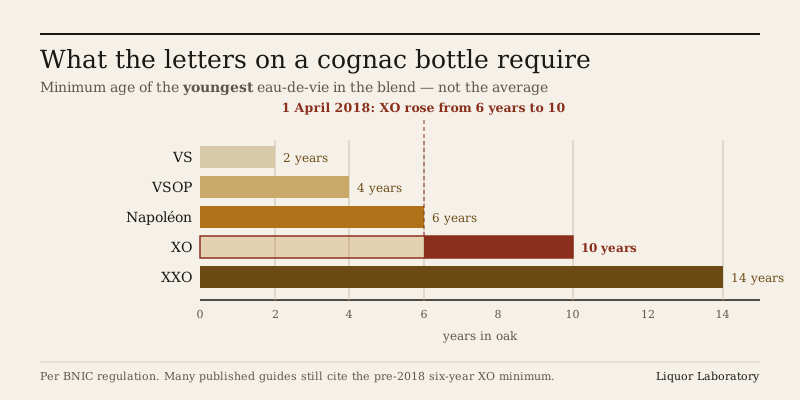
This runs against instinct, so here is the reasoning. Cognac's age designations are legally binding minimums: VS requires two years, VSOP four years, and XO ten years — the XO minimum having risen from six in April 2018. The older the blend, the more nuanced and layered it becomes.
And nuance is exactly what eggnog destroys. Cream coats the palate; sugar masks. The complexity you pay for in a VSOP or an XO is the first thing to disappear into a cup of sweetened, thickened dairy.
A VS cognac is fruitier, more forward, and less subtle — which in this specific application is a feature. It also costs a fraction as much.
If you only have VSOP, use it. Just do not go out and buy XO for this.
The bottles
Cognac
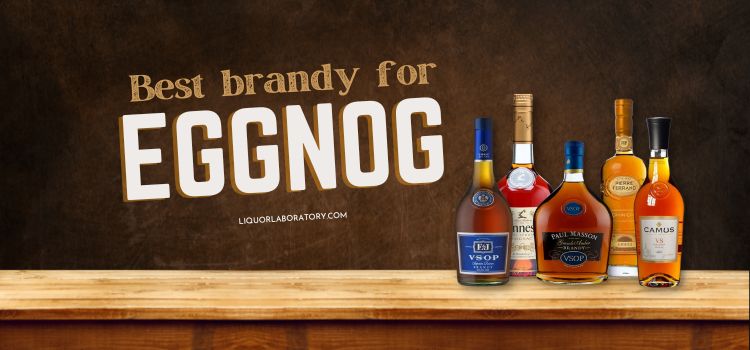
- A VS from any major house — Rémy Martin, Martell, Courvoisier, Hennessy. Grape-forward, clean, and the closest thing to the drink's original character.
- Martell VS Single Distillery. Martell distills without lees, giving a lighter, cleaner house style. Against heavy dairy that clarity is genuinely useful.
American brandy — the best value here
- Paul Masson Grande Amber VSOP, 40% ABV. American brandy carries more American-oak vanilla than cognac does, which sits beautifully with nutmeg and cream. It costs a fraction of entry cognac and performs better than the price suggests. Worth knowing: VS and VSOP are legally enforced only for cognac. On American brandy those letters are a voluntary convention rather than a certified age claim, though Paul Masson states four years for its VSOP.
- E&J VSOP. Softer and sweeter. Serviceable and cheap.
Apple brandy — the underrated choice
- Laird's Bottled-in-Bond Apple Brandy, 100 proof. This is the sleeper. Apple against nutmeg and cream is a genuinely excellent pairing, and at 100 proof it is one of the few brandies with enough strength to stay present. If you make eggnog every year and want to change something, change this.
What to skip. XO and above, for the reasons above. Flavored brandies, since the drink has enough sugar. And most fruit brandies other than apple — pear and cherry fight the nutmeg.
The proof problem
Most brandy and cognac is bottled at 40% ABV, 80 proof, which is below the threshold that survives eggnog comfortably. This is brandy's one real disadvantage against a 100-proof bonded whiskey.
Two ways around it:
Pour more. 2 oz of brandy per cup rather than the 1½ oz you would use with a 100-proof whiskey.
Split the spirits. Which is what the historical recipes did anyway.
The traditional build
Classic eggnog recipes use two or three spirits, not one. The most historically grounded combination is brandy and rum:
Per cup: 1 oz cognac or brandy, plus ½ oz aged rum.
The brandy brings grape fruit and elegance; the rum brings molasses weight. Some nineteenth-century recipes added a third element — sherry, or Madeira — which is worth trying if you have a bottle open.
A brandy eggnog worth making
Serves 6
- 4 egg yolks
- ⅓ cup sugar
- 1 cup heavy cream
- 2 cups whole milk
- 5 oz VS cognac or American brandy
- 2 oz aged rum
- Fresh nutmeg, grated over each glass
Whisk yolks and sugar until pale and thick. Whisk in cream and milk. Stir in the spirits. Chill at least four hours, ideally overnight.
Grate the nutmeg fresh. Pre-ground is the difference between eggnog that tastes homemade and eggnog that tastes like a carton.
On aged eggnog: the traditional practice of resting eggnog for weeks depends on sufficient alcohol content to be safe. If you are not following an established aged-nog recipe, drink within a few days and use pasteurized eggs.
More in our Brandy Guide.
Frequently asked questions
Is brandy or bourbon better in eggnog?
Brandy is the traditional spirit and gives a smoother, fruitier, more elegant result. Bourbon gives more vanilla and oak. Brandy is the more historically correct choice; neither is wrong.
What brandy is best for eggnog?
A VS cognac, or an American brandy such as Paul Masson VSOP. Laird's Bottled-in-Bond Apple Brandy at 100 proof is the best unconventional option.
Should I use VSOP or XO cognac in eggnog?
Neither. Use VS. The extra complexity in older cognac is exactly what cream and sugar erase, and XO requires a minimum of ten years since 2018 — that expense is wasted here.
How much brandy per cup of eggnog?
About 2 oz at 80 proof, since most brandy is bottled lower than bonded whiskey.
What was eggnog originally made with?
Sherry or brandy, following its descent from British posset. Rum and whiskey became the American standard because imported spirits were expensive and colonial supply favored rum.
Can I use cognac and rum together?
Yes, and you should. Roughly 1 oz brandy to ½ oz aged rum per cup is the historically grounded build.
For the American whiskey approach, see our hub guide to the best bourbon for eggnog.
Sources and method
Cognac age designations reflect BNIC regulation, including the XO minimum increase from six to ten years effective 1 April 2018. VS and VSOP are legally enforced for cognac only; no equivalent binding requirement governs American brandy. ABVs are standard US bottling strengths as printed on current labels. No prices or ratings are invented on this page.