Updated September 2026 by Lydia Martin
Martell was founded in 1715, making it the oldest of the great cognac houses. But the reason its bottles taste the way they do is a production decision, not a date.
The thing that makes Martell taste like Martell
Cognac is distilled twice in copper pot stills. The question every house answers is whether to distill the base wine with or without its lees — the spent yeast and fine sediment left after fermentation.
Most houses distill on the lees. It adds weight, richness and a certain rusticity.
Martell distills from clear wine, without lees. The result is lighter, cleaner and more elegant than its peers — less obviously powerful, more precise. If you have tried a cognac and found it heavier than you wanted, Martell is the house to try next.
The six crus, and why Martell's choice matters
Cognac is divided into six growing areas, ranked by soil. Chalk holds water and stresses the vines productively, so the chalkiest crus produce the most structured, longest-aging eaux-de-vie.
| Cru | Character |
|---|---|
| Grande Champagne | Chalkiest. Floral, powerful, slowest to mature, ages longest. |
| Petite Champagne | Similar but slightly softer and quicker to open. |
| Borderies | Smallest cru. Distinctly floral and nutty, matures faster. |
| Fins Bois | Rounder, fruitier, used widely in blends. |
| Bons Bois | Lighter, quicker, less complex. |
| Bois Ordinaires | Coastal and maritime in character. |
Rémy Martin built its identity on the two Champagne crus. Martell built its identity on the Borderies, using a higher proportion than any other major house.
That is the second half of the house style. Borderies eaux-de-vie bring a nutty, violet-tinged quality and mature comparatively quickly, which is why Martell's mid-range bottles taste more resolved than their age would suggest.
What the letters mean
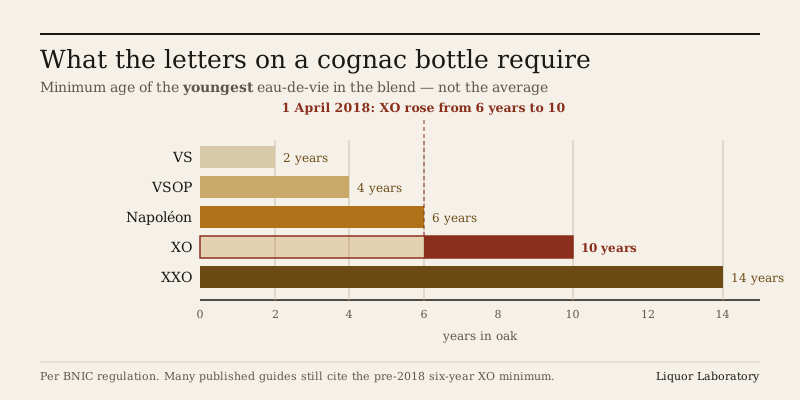
Under BNIC rules, the designation refers to the minimum age of the youngest eau-de-vie in the blend — not the average:
| Designation | Minimum |
|---|---|
| VS | 2 years |
| VSOP | 4 years |
| Napoléon | 6 years |
| XO | 10 years (raised from 6 in April 2018) |
| XXO | 14 years |
Note that XO row. The requirement changed on 1 April 2018, and a surprising amount of published guidance still quotes the old six-year figure. If a cognac guide tells you XO means six years, it has not been updated in eight years.
Because the number describes only the youngest component, an XO might be 90% ten-year spirit with a splash of thirty-five-year, or the reverse. Both are legally XO and they taste nothing alike. The system exists for trade consistency, not transparency.
The range
Martell VS Single Distillery. An entry cognac drawn from one distillery rather than blended across many — unusual at this price, and it produces a more consistent bottle year to year. Bright, fruity, uncomplicated. A mixing bottle.
Martell VSOP Red Barrel. Minimum four years, matured with a proportion of first-fill barrels that gives it more oak grip than most VSOPs carry. Baked apple, candied fruit, warm spice on the finish. This is the workhorse of the range and the most useful bottle in it.
Martell Blue Swift. Worth understanding precisely, because it confuses people. It is a VSOP-based eau-de-vie finished in Kentucky bourbon barrels. Cognac appellation rules govern what a producer may do to the spirit, and that finishing step falls outside them — so the product cannot legally be called cognac and is labeled as a spirit drink instead.
That is a labeling fact, not a quality judgment. It joins a pattern worth noticing across the spirits aisle: Captain Morgan Original at 35% ABV is not legally rum in the US, and Malibu at 21% is a liqueur. In each case the product is fine; the category word is the thing that does not apply.
Martell Cordon Bleu. Created in 1912 and the bottle the house is best known for. Heavily Borderies-driven, with candied fruit, mocha and a long nutty finish. It sits above VSOP in age and complexity without reaching XO pricing, and for many drinkers it is the sweet spot of the entire range — the point where you stop paying for age and start paying for blending.
Martell XO. Minimum ten years. Richer and more powerful than the house norm, with dried fruit and a pronounced Borderies nuttiness. Sipping only.
Martell versus the other three great houses
The four big houses are genuinely different, and knowing how is more useful than any score.
Martell — distills without lees, Borderies-heavy. Lightest and cleanest of the four. Nutty and precise.
Rémy Martin — bottles its entire range as Fine Champagne, meaning Grande and Petite Champagne only, at least half Grande. Floral and stone-fruited, built for long aging.
Hennessy — the largest house by volume. Fuller, more robust, more obviously oaked. The most widely recognized.
Courvoisier — sits between, with a fruit-forward and approachable style.
Trying Martell VSOP and Rémy VSOP side by side is the single most instructive twenty minutes available to someone learning cognac. The difference is not subtle, and it is entirely explained by lees and cru.
Where the value sits
VS for mixing. There is no reason to put an older cognac in a cocktail with citrus — the acidity and dilution destroy exactly what you paid extra for.
VSOP Red Barrel as the one bottle to own. It sips adequately and mixes well, and the first-fill oak gives it enough grip to survive a Sidecar.
Cordon Bleu as the best value in the upper range. You get most of what XO offers, from a bottle built around blending skill rather than a legal age minimum.
XO only if you sip cognac regularly and want depth. It is genuinely excellent and it is genuinely expensive, and those two facts are not the same thing.
How to drink it
Neat, in a tulip glass rather than a balloon snifter. The balloon disperses aroma; the tulip concentrates it. Do not warm the glass over a flame — a 1970s affectation that drives off alcohol vapor and burns your nose.
VSOP Red Barrel in a Sidecar. 2 oz cognac, 1 oz Cointreau, ¾ oz fresh lemon. Shake, strain, sugared rim optional. The oak grip is what makes Martell work here where a softer VSOP would fade.
Blue Swift in a cognac old fashioned. The bourbon-cask finish makes this an unusually good fit and a genuine bridge for whiskey drinkers.
Cognac and ginger ale. 2 oz VS or VSOP, ginger ale, lemon twist. A standard serve across much of Asia and much better than its simplicity suggests.
More in our Brandy Guide.
Frequently asked questions
What does Martell VSOP mean?
Very Superior Old Pale. The youngest eau-de-vie in the blend is at least four years old.
Is Martell Blue Swift a cognac?
No, deliberately. It is a cognac-based eau-de-vie finished in Kentucky bourbon barrels, and that finishing step places it outside cognac appellation rules. It is labeled a spirit drink.
How old is Martell Cordon Bleu?
There is no published age statement. It sits between VSOP and XO and is built around Borderies eaux-de-vie.
What is the Borderies?
The smallest of the six Cognac crus, producing floral, nutty eaux-de-vie that mature comparatively quickly. Martell uses a higher proportion than any other major house.
Which is better, Martell or Hennessy?
Different styles rather than different quality tiers. Martell is lighter and cleaner from distilling without lees; Hennessy is fuller and more robust.
Which is better, Martell or Rémy Martin?
Martell is nuttier and more precise; Rémy is more floral and structured. The difference comes from lees and cru, not quality.
Should I mix Martell XO?
No. Use VS or VSOP in cocktails. Citrus and dilution erase what you pay for in older cognac.
How old is Martell as a house?
Founded in 1715, the oldest of the major cognac houses.
Sources and method
Age designations reflect BNIC regulation, including the XO increase to ten years effective 1 April 2018. Cru boundaries and Fine Champagne requirements reflect the Cognac appellation rules. Production method and cru emphasis reflect the house's published information. No prices, ratings, or rankings are invented on this page.