Updated September 2026 by Lydia Martin
Rum is the least standardized major spirit category in the world, and that is the single most useful thing to know before you buy a bottle. Bourbon has a legal definition that dictates grain, barrel and proof. Tequila has a governing council and a denomination of origin. Rum has neither, in most of the places it is made. What one producer calls “dark rum” and what another calls “dark rum” may have nothing in common except the word.
This guide explains what the categories actually mean, where they mislead, and how to choose a bottle without relying on the label’s marketing.
First, the thing nobody tells you: color is not information
Walk down the rum aisle and you will see a spectrum from clear to near-black, and you will reasonably assume it maps to age, the way it roughly does with whiskey.
It does not. Caramel coloring is legal and widespread in rum, and it is used freely. A rum can be jet black because it spent fifteen years in oak, or because it spent one year in oak and then had coloring added. Nothing on the front label distinguishes those two bottles.
The reverse is also true. Many white rums are aged for one to three years and then filtered through charcoal to strip the color back out. Bacardi Superior is aged in oak before it is filtered clear. A white rum is not necessarily a young rum.
So: color tells you what a producer wanted the bottle to look like. It does not tell you what is inside. Age statements, proof, and country of origin do.
The categories you will actually encounter
White rum (also silver, light, blanco). Clear, light-bodied, usually 40% ABV. Most have spent some time in oak and been filtered. This is the mixing default — the correct choice for a daiquiri, a mojito, a piña colada, or anything where citrus and sugar need to stay in front. A good white rum is not supposed to dominate.
Gold rum (also amber, oro). Light to medium amber, typically 40% ABV, usually a few years in oak with some coloring adjustment. More vanilla and toasted sugar than white. This is the bottle for a rum and Coke, a Cuba Libre, or anywhere you want the rum audible but not loud.
Dark rum (also black). Deeper color, more molasses, sometimes noticeably sweeter. The category is very broad and the quality range inside it is enormous. Dark rum is what a Dark ‘n Stormy is built on, and it holds up against ginger beer where a white rum would vanish.
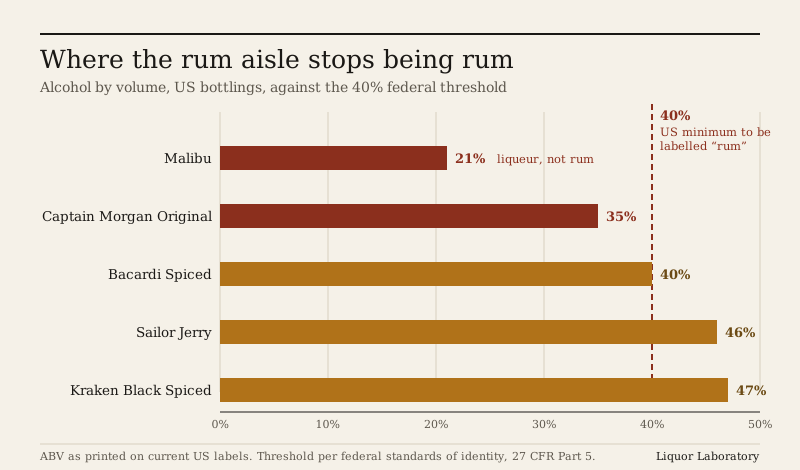
Spiced rum. A rum base — usually gold or dark — infused with vanilla, cinnamon, clove, nutmeg and similar. Almost always sweetened. This is a flavored product, not a style of rum, and the flavoring is where the producers differentiate. Read the ABV carefully here; the category ranges from 35% to 47%, which is a very wide spread.
Aged rum (añejo, XO, Gran Reserva, or a stated age). This is where rum stops being a mixer. Aged rums from Barbados, Jamaica, Guyana, Guatemala and Martinique are sipping spirits that compete with good whisky, and they are still one of the best values in the entire spirits world.
Overproof rum. Anything above 50% ABV, running to 75.5% at the extreme. Built for tiki drinks and floats, where a small volume of very concentrated rum does specific work. Handle with respect.
Rhum agricole. Distilled from fresh sugarcane juice rather than molasses. Predominantly from Martinique and Guadeloupe, and the only rum category with a rigorous appellation system behind it. Grassy, vegetal, and completely unlike molasses rum. If you have only had molasses rum, this will not taste like rum to you at first.
Cachaça. Brazilian, also from fresh cane juice, and legally its own category in the US rather than a rum. It is what a Caipirinha requires.
A more useful framework than color: the three style traditions
Rum professionals do not think in colors. They think in production traditions, which actually predict how a bottle will taste.
Spanish style (Cuba, Puerto Rico, Dominican Republic, Guatemala, Venezuela). Column-distilled, lighter-bodied, cleaner, often aged in a solera system. Bacardi, Don Q, Flor de Caña, Ron Zacapa. This is the smooth, approachable end of rum.
English style (Jamaica, Barbados, Guyana, Trinidad). Pot stills or a pot-column blend. Heavier, funkier, more assertive. Jamaican rum in particular carries “hogo” — a pungent, fruity, almost overripe intensity that comes from long fermentation. Appleton, Mount Gay, El Dorado, Smith & Cross.
French style (Martinique, Guadeloupe, Haiti). Cane juice rather than molasses. Grassy, mineral, herbaceous. Rhum JM, Clément, Barbancourt.
Knowing which tradition a bottle comes from tells you more about what is in the glass than any color word on the front label.
What the US legally requires
Under the federal standards of identity, a product must be bottled at 40% ABV or higher to be labeled simply as “rum.” That threshold matters more than most drinkers realize, because a number of well-known spiced products sit below it — Captain Morgan Original Spiced is 35% ABV, and is therefore not legally rum in the United States. It is classified as a distilled spirits specialty.
This is not a quality judgment. It is a labeling fact, and it explains why some bottles say “rum” and others say “spiced” or “rum with natural flavors” in small type. Once you notice it, you will see it everywhere.
Which rum should you buy?
For daiquiris, mojitos and highballs — a white rum at 40%. Any competent one will do; this is not where to spend money.
For rum and Coke — a gold rum. The barrel character is what keeps the drink from tasting like sweetened alcohol.
For a Dark ‘n Stormy — a dark rum with real molasses weight, or the traditional Bermudian choice.
For tiki drinks — you need at least two rums, usually a light Spanish-style and a heavy Jamaican, and often an overproof for the float. Tiki recipes assume blending.
For sipping — an aged rum with a real age statement, from Barbados, Jamaica, Guatemala or Martinique. This is the most underpriced sipping category in spirits.
For a first bottle — a good white rum and a good gold rum will cover the overwhelming majority of rum cocktails ever written.
One bottle often mis-shelved with rum is Malibu, a coconut liqueur at 21% ABV — not rum under US labeling rules.
More in our Rum Guide.
Frequently asked questions
What is the difference between white and dark rum?
Primarily body and flavor intensity, not necessarily age. White rum is light and built for mixing; dark rum carries more molasses and stands up to stronger mixers. Because caramel coloring is permitted, color alone does not indicate how long either spent in a barrel.
Is spiced rum real rum?
It is a rum base with added flavoring and usually added sugar. Whether it can legally be called “rum” in the US depends on its ABV — below 40%, it cannot.
What is the strongest rum?
Overproof rums run from 50% up to 75.5% ABV. They are intended for use in small measures within cocktails, not for drinking neat.
Does rum go bad?
Unopened and stored upright away from light, effectively no. Opened, it slowly oxidizes over a year or two — noticeable, but not spoilage.
Is rum gluten free?
Distilled spirits made from sugarcane contain no gluten. Flavored expressions can introduce other ingredients, so check those individually.
Why is some rum so cheap?
Sugarcane is abundant, column distillation is efficient, and much rum is aged briefly or not at all. Tropical aging is also faster than temperate aging, so a rum reaches maturity in fewer years than a Scotch would.
For the parallel map of juniper styles — London Dry, Old Tom, navy strength and more — see gin styles explained.
Sources and method
Category definitions reflect US federal standards of identity for distilled spirits and the appellation rules governing rhum agricole. ABVs are the standard US bottling strengths as printed on current labels. No prices, ratings, or rankings are invented on this page.