Updated October 2026
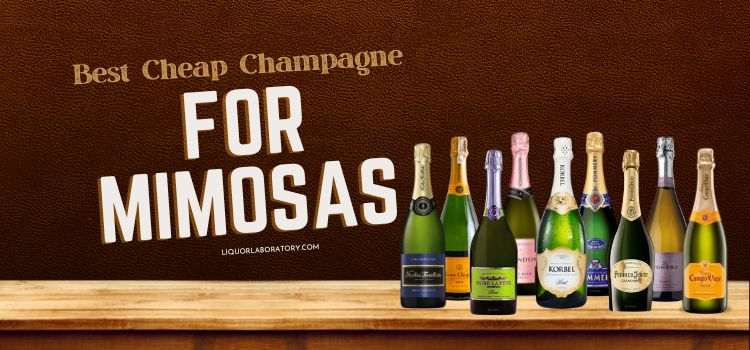
The best budget sparkling wine for mimosas is a dry (Brut) Cava or Prosecco, not true Champagne. Orange juice covers most of the wine’s subtle flavor, so you are paying for bubbles and crisp acidity, which affordable Cava, Prosecco, Crémant and American sparkling wine all deliver. Choose Brut or Extra Dry, chill it well, and save real Champagne for sipping on its own.
The mimosa is the default brunch and holiday drink, which means it is often made in big batches. That is exactly when it pays to choose the wine wisely. This guide explains what the label words mean, which styles make the best mimosas, and how to mix them so they stay bright and fizzy. For more on wine strength, see how much alcohol is in Champagne.
Champagne vs sparkling wine: what the label means
Many people say “champagne” for any sparkling wine, but the label tells a more specific story.
- Champagne: sparkling wine from the Champagne region of France, made with a second fermentation in the bottle. It is the most expensive style and its delicate yeasty, toasty notes are largely lost under orange juice.
- Cava: Spanish sparkling wine made by the same traditional, in-bottle method. It is usually crisp and dry, which suits mimosas well.
- Prosecco: Italian sparkling wine made mostly from the Glera grape, typically fermented in pressurized tanks. It is fruity and soft, with notes of pear and apple.
- Crémant: French sparkling wine made by the traditional method outside the Champagne region, such as Crémant de Loire or Crémant d’Alsace.
- American sparkling wine: made in many styles across the US.
US labeling law draws these lines too. Under 27 CFR § 4.21, the “champagne” type of sparkling wine gets its bubbles solely from a secondary fermentation in glass containers of no more than one gallon. Sparkling wine made the champagne way but with a different method or origin must say so: a tank-fermented wine labeled as an American champagne must carry a term such as “bulk process,” and “charmat method” may appear as extra information. Champagne is also listed as a semi-generic name under 27 CFR § 4.24 and 26 U.S.C. § 5388(c), which means a US producer can only use it with its true place of origin on the label, and only if it held label approval for that brand before March 10, 2006. That is why you still see “California Champagne” on a few long-standing American brands.
The best styles for mimosas
Cava
Dry, crisp and widely available in Brut versions, Cava is many bartenders’ first choice for mimosas. Its traditional-method bubbles are fine and persistent, so they survive the juice. Widely stocked examples include Freixenet Cordon Negro Brut.
Prosecco
Prosecco is fruitier and softer, which makes a smoother, slightly sweeter mimosa. The International Bartenders Association’s Mimosa specification actually calls for Prosecco: 75 ml fresh orange juice topped with 75 ml Prosecco in a flute, stirred gently, with an optional orange twist. If you want to compare Italian labels, see spumante vs brut.
Crémant
Crémant gives you a Champagne-like style from other French regions. It is a good middle ground when you want a little more depth than Cava or Prosecco.
American sparkling wine
Domestic Brut sparkling wines from California, New Mexico, Washington and elsewhere work well. Check whether the label says traditional method or bulk process if bubble quality matters to you.
Kirkland Signature sparkling wines
Costco’s store-brand sparkling wines are popular for brunch batches. Our guides cover who makes Kirkland Champagne and who makes Kirkland Prosecco. Note that Kirkland Signature Valdobbiadene Prosecco DOCG was recalled on November 6, 2025 (CPSC recall 26-068), so check any older bottles against that notice.
Pick the right sweetness level
Sweetness terms on sparkling wine are counterintuitive. From driest to sweetest, the common labels run Brut Nature, Extra Brut, Brut, Extra Dry, Dry and Demi-Sec. Orange juice is already sweet, so Brut is the safest choice. Extra Dry, which is actually a touch sweeter than Brut, works if you like a softer drink. Avoid Demi-Sec and sweet Moscato unless you are cutting the juice with something tart.
How to make better mimosas
- Chill everything. Cold wine holds bubbles longer, and cold juice keeps the drink from going flat.
- Juice first, wine second. Pour the juice into the flute, then add the wine slowly down the side, as the IBA method suggests.
- Stir gently, once. Over-stirring knocks out the bubbles.
- Choose pulp-free juice. Pulp creates foam and dulls the fizz.
- Adjust the ratio. The IBA uses equal parts. Many hosts prefer more wine and less juice for a drier drink.
- Batch smart. For a crowd, set out chilled bottles and juice and let guests pour, rather than mixing a pitcher that goes flat.
Variations are easy: swap orange for grapefruit, cranberry or peach purée. For other wine-based ideas, see our white-wine drinks. If you prefer a spirit-based brunch drink, our guide to the best vodka for a screwdriver covers the orange juice classic.
How strong is a mimosa?
The NIAAA defines a US standard drink as 14 grams of pure alcohol, which equals 5 oz of 12% ABV wine. A mimosa made with 2.5 oz of 12% sparkling wine and 2.5 oz of juice is about half a standard drink. Topping it up with more wine raises the count, and brunch mimosas are easy to refill without noticing. For more, see how wine pours add up. Pace yourself and never drive after drinking.
Frequently asked questions
Do you need real Champagne for mimosas?
No. Orange juice masks most of what makes Champagne special. Brut Cava or Prosecco is the better value choice.
Is Prosecco or Cava better for mimosas?
Both work. Cava makes a drier, crisper drink; Prosecco makes a fruitier, softer one. The IBA specification uses Prosecco.
What does Brut mean?
Brut means dry. It is drier than Extra Dry, which is a common source of confusion.
What is the mimosa ratio?
The IBA specification uses equal parts: 75 ml orange juice and 75 ml Prosecco.
Can you make mimosas ahead of time?
Not fully. Mix them just before serving so they keep their bubbles.
Explore more in our Wine Guide.
Sources
- International Bartenders Association, Mimosa specification
- 27 CFR § 4.21, standards of identity for wine, sparkling grape wine and champagne (eCFR / Cornell LII)
- 27 CFR § 4.24, generic, semi-generic and non-generic names (eCFR / Cornell LII)
- 26 U.S.C. § 5388(c), semi-generic wine names (Cornell LII)
- U.S. Consumer Product Safety Commission, Recall 26-068, Kirkland Signature Valdobbiadene Prosecco DOCG (Nov 6, 2025)
- NIAAA, What Is a Standard Drink?