Updated November 2026
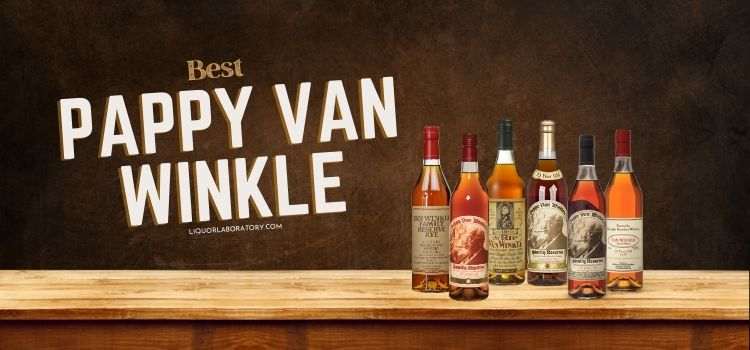
There is no single “best” Pappy Van Winkle; the right bottle depends on what you like in bourbon. The Van Winkle lineup made at Buffalo Trace runs from Old Rip Van Winkle 10 Year (107 proof) and Van Winkle Special Reserve 12 Year “Lot B” (90.4 proof) to Pappy Van Winkle’s Family Reserve 15 Year (107 proof), 20 Year (90.4 proof) and 23 Year (95.6 proof), plus a 13 Year rye (95.6 proof). Drinkers who want bold, fuller flavor tend to reach for the 10 and 15; those who want softer, older, more oak-driven bourbon tend to prefer the 12, 20 and 23.
This guide explains how the bottles differ, what the producer says about each, and how to pick the one that suits you, without leaning on hype or secondary-market chatter.
What Pappy Van Winkle is
Pappy Van Winkle is a family of long-aged bourbons (and one rye) named for Julian P. “Pappy” Van Winkle Sr. According to Buffalo Trace, Pappy started as a traveling salesman for the W.L. Weller and Sons wholesale house in Louisville, later bought the business with partner Alex Farnsley, and joined A. Ph. Stitzel to form the Stitzel-Weller Distillery, which he opened in South Louisville in 1935. His grandson, Julian Van Winkle III, took over the family brand in 1981 and added the 12, 15, 20 and 23 year labels.
In 2002 the Van Winkle family entered a joint venture with Buffalo Trace Distillery in Frankfort, Kentucky, which now produces, ages and bottles all Van Winkle whiskey to the family’s guidelines. If you are planning a visit, our guides to Kentucky bourbon tours and distilleries on the Bourbon Trail cover the region.
Why the wheated recipe matters
The Van Winkle bourbons use a wheated recipe, meaning wheat rather than rye is the secondary grain after corn. Buffalo Trace says it uses a wheated recipe for its Weller and Van Winkle bourbons and that wheated mashes allow longer aging, sometimes two decades or more, while giving a smoother, somewhat sweeter flavor than the traditional rye recipe. That is why the same distillery’s Weller bourbons are often suggested as the closest everyday relatives. For more wheated options, see our guide to wheated bourbons.
Every Van Winkle bourbon still has to meet the federal bourbon standard in 27 CFR § 5.143: at least 51% corn, distilled at no more than 160 proof, entered into new charred oak containers at no more than 125 proof, and bottled at 80 proof or higher. The age on the label is governed by 27 CFR § 5.74, which treats an age statement as the age of the youngest whiskey in the bottle.
The Van Winkle lineup, bottle by bottle
Ages and proofs below come from Buffalo Trace’s Van Winkle release announcements. Tasting descriptions are the producer’s own.
- Old Rip Van Winkle Handmade Bourbon 10 Year, 107 proof. The youngest and one of the two highest-proof bottles. Buffalo Trace describes its finish as “an elegant balance between oak, grain, and maturation.”
- Van Winkle Special Reserve Bourbon 12 Year “Lot B,” 90.4 proof. A lower-proof, softer bourbon. The producer calls it “an outrageously well-crafted bourbon that pays homage to its source ingredients.”
- Van Winkle Family Reserve Rye 13 Year, 95.6 proof. The only rye in the family, so it is not a wheated bourbon. Buffalo Trace says “a symphony of flavors sits endlessly on the palate.”
- Pappy Van Winkle’s Family Reserve Bourbon 15 Year, 107 proof. Older than the 10 but at the same proof. The producer describes it as “an unbelievably opulent and flawless bourbon that takes wood and distillate to its absolute pinnacle.”
- Pappy Van Winkle’s Family Reserve Bourbon 20 Year, 90.4 proof. Very old and gentle in strength. Buffalo Trace calls it “suave and confident with layers of bold, integrated nuances.”
- Pappy Van Winkle’s Family Reserve Bourbon 23 Year, 95.6 proof. The oldest regular release. The producer says “wood is the star here with supporting notes of caramel, apple, apricot.”
Buffalo Trace’s brand page also lists an Old Rip Van Winkle 25 Year Old Bourbon, packaged in a handmade wooden box with a certificate signed by Julian Van Winkle, which is a rare special release rather than part of the yearly lineup.
Which bottle fits which drinker
- You like bold, full-proof bourbon: the 10 Year and 15 Year, both at 107 proof, deliver the most intensity. Many drinkers add a few drops of water to open them up.
- You prefer a soft, easy sipper: the 12 Year Lot B at 90.4 proof is the gentlest of the younger bottles.
- You love old, oak-forward whiskey: the 20 Year and 23 Year show the most wood influence. If heavy oak is not your style, older is not automatically better.
- You drink rye: the 13 Year Family Reserve Rye is the one to look for.
- You are buying a gift: think about how the recipient drinks bourbon now. Our Buffalo Trace gift ideas include easier-to-find bottles from the same distillery.
Because these bottles are scarce, pour them in small measures and pay attention to what you taste. Our guide to how much is a dram of whiskey explains typical tasting pours. A 1.5 oz pour at 107 proof (53.5% ABV) holds about 1.34 US standard drinks, since one standard drink is 14 grams of alcohol, or 1.5 oz at 40% ABV.
How Van Winkle bourbon is sold
Buffalo Trace says supply is limited because long aging loses so much whiskey to evaporation, and the release typically arrives in the fall. The company notes that many retailers sell their allocation through lotteries, often benefiting charities, and it warns against buying from private sellers on social media groups or online marketplaces because counterfeit bottles have been found. For other long-aged bottles worth seeking, see our guide to bourbons to collect and our Bourbon Guide.
Frequently asked questions
Which Pappy Van Winkle is the best?
It depends on taste. Fans of bold flavor often prefer the 15 Year at 107 proof, while drinkers who like older, softer, oak-led bourbon lean toward the 20 Year or 23 Year.
Is Pappy Van Winkle a wheated bourbon?
Yes. Buffalo Trace says its Van Winkle bourbons use a wheated recipe. The 13 Year Family Reserve Rye is the exception, since it is a rye whiskey.
Who makes Pappy Van Winkle today?
Buffalo Trace Distillery in Frankfort, Kentucky, under a joint venture with the Van Winkle family that began in 2002.
What is the difference between Old Rip Van Winkle and Pappy Van Winkle?
Both are Van Winkle family labels. Old Rip Van Winkle is the 10 Year bourbon, Van Winkle Special Reserve is the 12 Year, and the Pappy Van Winkle’s Family Reserve name covers the 15, 20 and 23 Year bourbons.
How can I avoid fake Pappy Van Winkle?
Buy from licensed retailers, including their lotteries, and avoid private sellers on social media or marketplaces, which Buffalo Trace says have sold counterfeits.
Sources
- Buffalo Trace Distillery, Van Winkle bourbon release announcement (October 4, 2022), with ages, proofs, tasting notes, wheated recipe and 2002 joint venture.
- Buffalo Trace Distillery, Van Winkle brand page.
- The Daily Pour, 2024 Van Winkle collection (ages and proofs).
- US retailer listings for Van Winkle Special Reserve 12 Year Lot B, 90.4 proof.
- 27 CFR § 5.143 (bourbon) and 27 CFR § 5.74 (age statements), eCFR.
- NIAAA, What Is a Standard Drink?