Updated November 2026
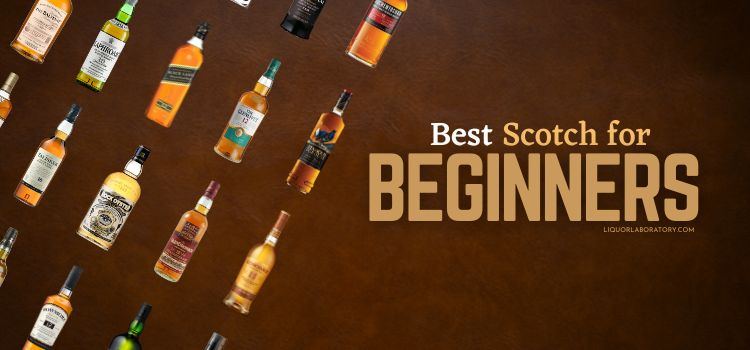
The best Scotch for beginners is a smooth, unpeated whisky that tastes of fruit, honey and vanilla rather than smoke. The Glenlivet 12 and Glenfiddich 12 (both 40% ABV) are the classic first single malts, Monkey Shoulder (43% ABV) is the easiest blended malt to sip or mix, and Johnnie Walker Black Label and Dewar’s White Label (both 40% ABV) are reliable blends. Once you like those, step up to The Balvenie DoubleWood 12 or The Macallan Double Cask 12 for sherry richness, then try Talisker 10 for your first taste of smoke.
Below are eight beginner-friendly bottles, what each tastes like according to its producer, how to taste Scotch for the first time, and what the words on the label mean. For more on whisky styles, see our Whiskey Guide.
Quick picks
| Whisky | Type | ABV | Style |
|---|---|---|---|
| The Glenlivet 12 | Single malt, Speyside | 40% | Light, fruity, pineapple |
| Glenfiddich 12 | Single malt, Speyside | 40% | Pear, butterscotch, cream |
| Monkey Shoulder | Blended malt | 43% | Orange, vanilla, honey |
| Johnnie Walker Black Label | Blended Scotch, 12 years | 40% | Rich, lightly smoky |
| Dewar’s White Label | Blended Scotch | 40% | Honey, heather, light |
| The Balvenie DoubleWood 12 | Single malt, Speyside | 43% | Vanilla, honey, sherry fruit |
| The Macallan Double Cask 12 | Single malt, Speyside | 43% | Sherry, dried fruit, oak |
| Talisker 10 | Single malt, Isle of Skye | 45.8% | Peat smoke, sea salt, pepper |
The best Scotch for beginners
1. The Glenlivet 12: best first single malt
The Glenlivet 12 is bottled at 40% ABV and matured first in traditional oak and then in American oak casks, which the distillery says adds vanilla and smoothness. Its notes are fruity and summery with “strong pineapple notes” and a creamy, silky finish. It is light, sweet and never smoky, which makes it the textbook first Scotch. Read our full Glenlivet 12 guide, or see how it compares in Glenlivet vs Macallan.
2. Glenfiddich 12: best for sweet, fruity flavor
Glenfiddich 12 is also 40% ABV and is matured for 12 years in Oloroso sherry and bourbon casks, then married in oak tuns. Glenfiddich describes a fresh, fruity nose with a hint of pear, a sweet palate of butterscotch, cream, malt and subtle oak, and a long, smooth, mellow finish.
3. Monkey Shoulder: best for mixing and sipping
Monkey Shoulder is a blended malt, meaning it is a mix of single malts from more than one distillery with no grain whisky. Iowa ABD lists it at 86 proof (43% ABV) and describes it as a blend of Speyside single malts. Virginia ABC notes zesty orange and mellow vanilla on the nose and honey and spiced oak on the palate. It works neat, on the rocks or in a highball, so it is a good bottle for someone still deciding how they like Scotch.
4. Johnnie Walker Black Label: best blended Scotch
Johnnie Walker Black Label carries a 12 year age statement and is bottled at 80 proof (40% ABV) in the US. It is richer than most blends and has a gentle wisp of smoke, which makes it a good bridge toward peated malts. Learn about the brand in our Johnnie Walker guide and see how it compares with its smokier sibling in Johnnie Walker Black vs Double Black.
5. Dewar’s White Label: best everyday highball Scotch
Dewar’s White Label is a 40% ABV blended Scotch first created in 1899 by the company’s first master blender, and Difford’s Guide calls it the best-selling Scotch whisky in the USA. Aberfeldy single malt sits at the heart of the blend. Difford’s describes honey, heather and stewed pear on the nose and toasted malt, toffee and a faint hint of smoke on the palate. It is light enough for a Scotch and soda. For more blends, see our pick of the best blended Scotch, and for another classic, read about Black and White.
6. The Balvenie DoubleWood 12: best next step
The Balvenie DoubleWood 12 is 43% ABV (86 proof). It is matured in traditional oak whisky casks, then finished for nine months in first-fill European oak sherry casks. The Balvenie says the American oak brings warming vanilla and spice and the sherry finish adds fruity, honeyed depth. Virginia ABC adds cinnamon, tangy fruit and peppery milk chocolate notes.
7. The Macallan Double Cask 12: best sherried Scotch
The Macallan Double Cask 12 is bottled at 86 proof (43% ABV) in the US and is matured in sherry-seasoned American and European oak casks. Macallan describes creamy butterscotch, toffee apple, candied orange and vanilla custard on the nose, and honey, wood spice, citrus, raisins and caramel on the palate, with a warm, sweet, drying oak finish. Read how to drink Macallan and our guide to the best Macallan whiskey. If you enjoy sherry-cask Scotch, our Dalmore guide covers another rich Highland malt.
8. Talisker 10: best first smoky Scotch
When you are ready for peat, Talisker 10 from the Isle of Skye is a balanced place to start. It is bottled at 45.8% ABV, and the distillery describes strong peat smoke with sea salt and citrus sweetness, dried fruit and barley on the palate, and a long, warming, peppery finish. It is smoky but not as medicinal as some Islay malts. When you want to go further, compare Lagavulin vs Laphroaig.
How to drink Scotch as a beginner
- Pour about 1 oz into a tulip-shaped glass or a small rocks glass.
- Smell it gently with your mouth slightly open, so the alcohol does not overwhelm you.
- Take a small sip and hold it on your tongue for a few seconds before swallowing.
- Add a few drops of water. Water softens the alcohol and often opens up fruit and sweetness.
- If it is still too strong, try it on one large ice cube or as a highball with soda water or ginger ale.
For more serving ideas, see what to mix with Scotch and our classic Scotch on the rocks with a twist. Coming from bourbon? Read Scotch vs bourbon first.
What the label means
On a US label, the term is set by 27 CFR § 5.143, which defines Scotch whisky as a distinctive product of Scotland, manufactured in Scotland in compliance with UK law, and requires a mixture of whiskies to be labeled “blended Scotch whisky” or “Scotch whisky, a blend.” The same section sets an 80 proof (40% ABV) minimum for whisky.
Under the Scotch Whisky Regulations 2009, regulation 3, Scotch must be distilled in Scotland, matured in Scotland in oak casks of no more than 700 liters for at least three years, contain nothing but water and plain caramel coloring, and be bottled at no less than 40% ABV. The rules set five categories:
- Single malt: from one distillery, made only from water and malted barley in pot stills (Glenlivet, Glenfiddich, Balvenie, Macallan, Talisker).
- Single grain: from one distillery, but not a single malt or blend.
- Blended malt: single malts from more than one distillery (Monkey Shoulder).
- Blended grain: single grain whiskies from more than one distillery.
- Blended Scotch: one or more single malts blended with one or more single grains (Johnnie Walker, Dewar’s).
An age statement such as “12” means the youngest whisky in the bottle is at least that old. “Single” does not mean a single cask; it means a single distillery.
Strength and calories
A US standard drink is 14 grams of alcohol, the amount in 1.5 oz of 40% spirit. So a 1.5 oz pour of Glenlivet 12, Glenfiddich 12, Johnnie Walker Black or Dewar’s is one standard drink, a 43% pour is about 1.1, and Talisker 10 is about 1.1 as well. Peat adds smoke flavor, not extra alcohol. Curious about calories? See how many calories are in Scotch. Pace yourself and never drink and drive.
Frequently asked questions
What is the smoothest Scotch for beginners?
Unpeated Speyside single malts such as The Glenlivet 12 and Glenfiddich 12 are among the smoothest. They are 40% ABV and taste of fruit, honey and vanilla.
Should beginners start with single malt or blended Scotch?
Either works. Blends such as Dewar’s and Johnnie Walker Black are versatile and great in highballs. Single malts such as Glenlivet 12 show more of one distillery’s character. Try one of each.
Is Scotch smoky?
Not always. Smoke comes from peat used to dry the malted barley. Most Speyside malts are unpeated, while Islay and some island whiskies such as Talisker are smoky.
Should you add water or ice to Scotch?
Yes, if you like. A few drops of water can open up the aroma, and ice makes a stronger whisky easier to drink. There is no wrong way.
Sources
- The Glenlivet, 12 Year Old (40% ABV, casks, tasting notes); Glenfiddich, 12 Year Old (40% ABV, Oloroso sherry and bourbon casks, tasting notes).
- Iowa Alcoholic Beverages Division, Monkey Shoulder listing (86 proof, Speyside single malts); Virginia ABC, Monkey Shoulder and The Balvenie DoubleWood 12 listings.
- The Balvenie, DoubleWood 12 (43% ABV, nine-month sherry finish); The Macallan Double Cask 12 producer notes and cask details as reported by The Whiskey Wash.
- Difford’s Guide, Dewar’s White Label (40% ABV, 1899, Aberfeldy, tasting notes).
- Malts.com, Talisker 10 Year Old (45.8% ABV, Isle of Skye, tasting notes).
- 27 CFR § 5.143 (whisky standards of identity, Scotch whisky), via Cornell Legal Information Institute.
- The Scotch Whisky Regulations 2009, regulation 3, via legislation.gov.uk.
- National Institute on Alcohol Abuse and Alcoholism, “What Is a Standard Drink?”