Updated May 2026.
All bourbon is whiskey. Most whiskey is not bourbon. TTB bourbon is a whiskey mashed from at least 51% corn, distilled at ≤160 proof, entered into new charred oak at ≤125 proof, bottled at ≥40% ABV, and made in the United States. “Kentucky” on the label is a place claim, not the legal minimum. A 1.5-ounce 80-proof pour is one NIAAA standard drink for either class.
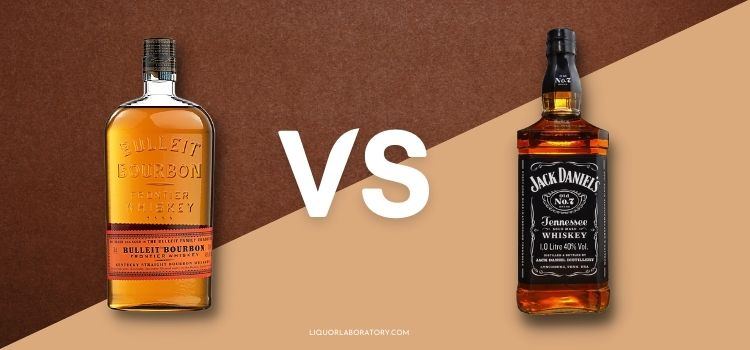
Scotch, Irish, Canadian, rye, and Tennessee whiskey are other whiskey types with other rules. Jack Daniel’s is Tennessee whiskey (charcoal mellowing) and is not labeled bourbon even though the mash would often qualify. Related: whiskey guide, Jim Beam identity.
The legal split
| Rule | Bourbon (TTB) | Whiskey generally |
|---|---|---|
| Grain | ≥51% corn | Varies by type (rye ≥51% rye; malt ≥51% malted barley) |
| Barrel | New charred oak | Scotch often used oak; Canadian/Irish differ |
| Place | United States | Wherever that type’s law says |
| Color / flavor add | No (straight bourbon) | Some types allow caramel or flavoring — read the class |
| Age word “straight” | ≥2 years | Same US “straight” idea; Scotch is ≥3 years |
A 750 mL 40% bottle is about 17 standard drinks; 45% is about 19. Four 1.5-ounce 40% pours are four drinks. NIAAA binge pattern is a health line, not a target. “Smooth” is not a TTB class. Vs rye: rye vs bourbon. Vs Scotch: Scotch vs bourbon. Pour math: whiskey drinks.
More in our Bourbon Guide.
Sources
- TTB 27 CFR 5.143 (bourbon / whiskey identity).
- NIAAA standard drink (December 2025).
- No invented mash-bill percentages for brands that do not publish them.