Updated November 2026
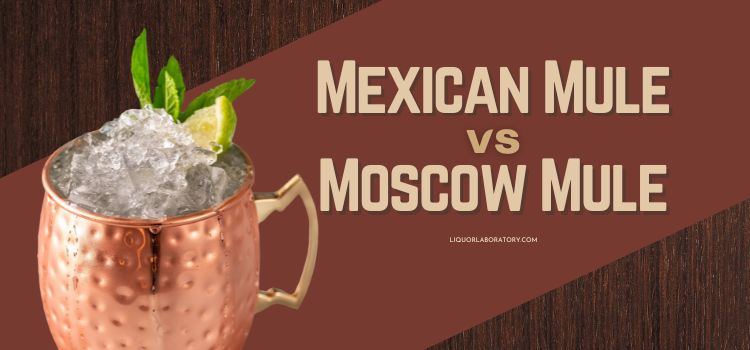
A Moscow Mule is vodka, ginger beer and lime, usually served in a copper mug. A Mexican Mule is the same drink with tequila in place of the vodka. Everything else stays the same, so the difference in the glass comes down to the spirit: vodka keeps the drink clean and lets the ginger lead, while tequila adds the cooked agave, pepper and citrus character of the spirit. Neither is better in absolute terms; it depends on the flavor you want.
Mexican Mule vs Moscow Mule at a glance
| Feature | Moscow Mule | Mexican Mule |
|---|---|---|
| Base spirit | Vodka | Tequila (blanco is the usual choice) |
| Mixer | Ginger beer | Ginger beer |
| Citrus | Fresh lime juice | Fresh lime juice |
| Recipe status | On the IBA cocktail list | Variation; no IBA spec |
| Flavor lead | Ginger and lime | Agave, ginger and lime |
| Traditional vessel | Copper mug or rocks glass | Copper mug or rocks glass |
Where the Moscow Mule came from
The Moscow Mule is an American drink from the early 1940s, despite the Russian name. The usual story ties it to three businesses that needed sales. Jack Morgan ran the Cock ‘n’ Bull restaurant in Hollywood and sold his own Cock ‘n’ Bull ginger beer. John G. Martin was president of G.F. Heublein Brothers of Hartford, Connecticut, which owned the Smirnoff vodka brand at a time when most American drinkers had never tried vodka. Pairing the two products in one easy highball gave both men something to sell.
Accounts differ on the details. Wikipedia cites a 1948 New York Herald Tribune report placing the first mule in 1941 at the Chatham Hotel bar in Manhattan, while other early coverage credits Los Angeles, and a later account credits Cock ‘n’ Bull bartender Wes Price, who said he was trying to clear out unsold stock. What the sources agree on is the promotion. Martin photographed bartenders holding a copper mug and a bottle of Smirnoff and showed the pictures to other bars, and the copper mug became the drink’s calling card.
The Mexican Mule came later as one of many mule variations. Tequila makes a Mexican Mule; bourbon makes a Kentucky Mule.
How to make each drink
Moscow Mule (IBA spec)
The IBA lists the Moscow Mule with these measures:
- 45 ml (about 1.5 oz) vodka
- 120 ml (about 4 oz) ginger beer
- 10 ml (about 1/3 oz) fresh lime juice
Pour the vodka and ginger beer into a mule cup or rocks glass with ice, add the lime juice, and stir gently. Garnish with a lime slice. If you need help picking a bottle, see our guide to the best vodka for a Moscow Mule, or browse more vodka basics.
Mexican Mule (house build)
There is no IBA spec for the Mexican Mule, so this is our house build. It keeps the IBA proportions and swaps the spirit:
- 45 ml (about 1.5 oz) blanco tequila
- 120 ml (about 4 oz) ginger beer
- 10 to 15 ml (about 1/3 to 1/2 oz) fresh lime juice
Build it the same way over ice and garnish with a lime wheel. A little extra lime suits tequila. Choosing a good tequila for a Mexican Mule matters more here than vodka does in the original, because the spirit carries real flavor. A list of popular tequila brands is a good starting point.
In both drinks, the ginger beer brand you choose changes the result a lot. Spicier ginger beers stand up to tequila; softer, sweeter ones suit vodka. Our guide to ginger beer for a Moscow Mule compares styles.
The real difference: vodka vs tequila
Under US labeling rules, vodka is meant to be neutral. 27 CFR § 5.142 defines vodka as neutral spirits that may be treated with charcoal or other materials so the product has no distinctive character, aroma, taste or color. The rule allows small amounts of sugar (up to 2 grams per liter) and citric acid (up to 1 gram per liter), and vodka must be bottled at no less than 40% alcohol by volume. That neutrality is why the Moscow Mule tastes mostly of ginger and lime.
Tequila works the other way. 27 CFR § 5.148 treats tequila as a distinctive product of Mexico, made in Mexico under Mexican law. That law is NOM-006-SCFI-2012, which requires tequila to come from blue agave (Agave tequilana Weber, blue variety) grown in the protected territory and allows bottling between 35% and 55% alcohol by volume. A bottle labeled “100% agave” gets its fermentable sugar entirely from agave, while plain “tequila” (often called mixto) needs at least 51% agave sugars. Those agave flavors are what make a Mexican Mule taste earthier, more peppery and more savory than its vodka cousin.
Want more tequila mixing ideas? Our guide to the best tequila for mixed drinks covers blancos that work in highballs.
Are copper mugs safe?
Copper mugs are traditional, but there is a real safety point. In 2017 the Iowa Alcoholic Beverages Division issued an advisory citing the FDA Model Food Code, which prohibits copper from coming into direct contact with foods that have a pH below 6.0. A mule made with lime juice is well below that level, and copper can leach into acidic drinks. The advisory said copper mugs lined on the inside with another metal, such as nickel or stainless steel, are fine to use.
Use a lined mug, or serve the drink in a rocks glass, which the IBA spec allows.
How strong is a mule?
The IBA build uses 1.5 oz of spirit. At 40% ABV (80 proof), that is 0.6 oz of pure alcohol, which equals one US standard drink. The NIAAA defines a standard drink as 14 grams of pure alcohol, the amount in 1.5 oz of 40% spirits. Many bars pour 2 oz instead; at 80 proof that is 0.8 oz of alcohol, or about 1.33 standard drinks. A higher-proof bottle raises the count further.
The ginger beer and lime add volume but no meaningful alcohol, so a tequila and a vodka mule of the same pour and proof carry the same amount of alcohol. If you are pacing a night of margaritas or mules, our page on how many margaritas it takes to feel the effects explains standard drinks in more detail. Never drink and drive.
Which one should you order?
Pick the Moscow Mule if you want a bright, ginger-forward highball where the spirit stays in the background.
Pick the Mexican Mule if you already enjoy tequila or want a mule with more depth. A 100% agave blanco gives the cleanest agave flavor; a reposado makes a rounder, slightly oakier drink. Because it is a variation, ask how the bar builds it.
FAQ
Is a Mexican Mule the same as a Moscow Mule?
Almost. Both use ginger beer and lime. The Moscow Mule uses vodka, while the Mexican Mule uses tequila. The Moscow Mule refers specifically to the vodka version, which is the one on the IBA cocktail list; see our pick of the best vodka for a Moscow Mule.
Which tequila is best for a Mexican Mule?
A blanco tequila is the usual choice because its bright agave flavor stands up to ginger. Look for “100% agave” on the label if you want the spirit to come only from agave sugars.
Why is it called a Moscow Mule?
“Moscow” points to vodka’s Russian associations, and Smirnoff marketed the drink heavily. “Mule” is usually explained as a nod to the ginger beer’s kick. The drink itself was created in the United States in the early 1940s.
Do you need a copper mug?
No. The IBA spec allows a rocks glass. If you use copper, choose a mug lined with stainless steel or nickel, as the Iowa advisory recommends.
Sources
- International Bartenders Association, Moscow Mule recipe (iba-world.com).
- Wikipedia, “Moscow mule” (origin accounts, Heublein, Cock ‘n’ Bull, copper mug promotion, Mexican mule variation).
- CBS News, “Copper cocktail mugs may cause food poisoning” (August 8, 2017), reporting the Iowa Alcoholic Beverages Division advisory and FDA Model Food Code pH 6.0 rule.
- 27 CFR § 5.142 (vodka) and 27 CFR § 5.148 (tequila), Electronic Code of Federal Regulations.
- NOM-006-SCFI-2012, Mexican standard for tequila.
- NIAAA, “What Is a Standard Drink?”
Explore more in our Tequila Guide and Vodka Guide.