Updated October 2026
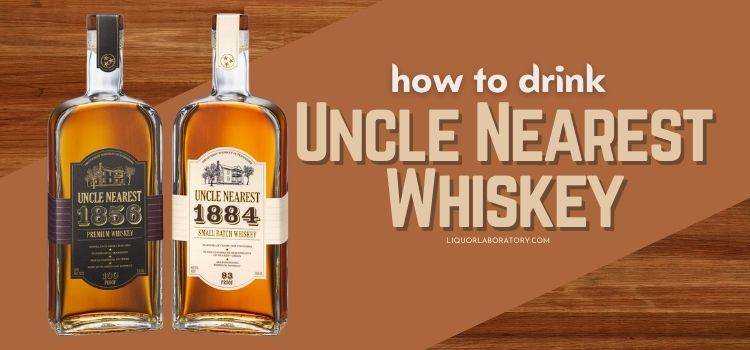
The best way to drink Uncle Nearest depends on the bottle. Uncle Nearest 1856 Premium Whiskey, at 100 proof, shines neat with a few drops of water or over one large ice cube. The 93-proof 1884 Small Batch is softer and works both for sipping and in classic cocktails like an Old Fashioned or a Whiskey Sour. Because both are bottled above the standard 80 proof, a little water or ice helps the flavor open up.
This guide covers each core bottle, five ways to serve it, and how to taste it properly.
About Uncle Nearest
Uncle Nearest honors Nathan “Nearest” Green, a formerly enslaved man who taught distilling to a young Jack Daniel and became the first known African American master distiller in the United States. Fawn Weaver launched the brand in July 2017 with Uncle Nearest 1856 Premium Whiskey. The brand presents its whiskeys as Tennessee whiskey; 1856, for example, is filtered through maple charcoal before aging, a technique historians connect to Green’s methods.
| Bottle | Proof (ABV) | Best for |
|---|---|---|
| Uncle Nearest 1856 Premium Whiskey | 100 (50%) | Sipping neat, with water, or on one large cube |
| Uncle Nearest 1884 Small Batch Whiskey | 93 (46.5%) | Sipping and classic cocktails |
| Nearest Green Tennessee Whiskey | 84 (42%) | Highballs and everyday mixing |
Proofs vary across special releases, so always check the label.
1. Neat, With a Few Drops of Water
This is the best way to learn what the whiskey tastes like. Pour 1 to 1.5 ounces of 1856 into a tulip glass or small rocks glass and let it rest a minute. Smell it gently, take a small first sip, then add three or four drops of water and taste again. Water lowers the alcohol burn and releases aromas.
The producer’s notes for 1856 describe a nose of hay, stone fruit such as peach and apricot, caramel corn and maple, a palate of spicy caramel and dried fruit, and a long, sweet finish with vanilla. For a refresher on sipping technique, see what neat means in a drink.
2. On the Rocks
Use one large ice cube or sphere rather than several small cubes. A large cube chills the whiskey while melting slowly, so the drink stays balanced for longer. This suits both 1856 and 1884, especially on a warm evening. Debating cold versus room temperature? Read should bourbon be neat or chilled.
3. Uncle Nearest Old Fashioned
- 2 oz Uncle Nearest 1884
- 0.25 oz demerara or simple syrup
- 2 dashes Angostura bitters
- Orange peel
Stir the whiskey, syrup and bitters with ice for 20 to 30 seconds, strain over a large cube and express the orange peel over the top. The 1884’s caramel and fruit notes make a rich, smooth Old Fashioned.
4. Uncle Nearest Whiskey Sour
- 2 oz Uncle Nearest 1884
- 0.75 oz fresh lemon juice
- 0.75 oz simple syrup
- Egg white (optional)
Shake hard with ice and strain over fresh ice. If using egg white, shake first without ice to build foam, then shake again with ice.
5. Tennessee Highball
- 1.5 oz Uncle Nearest (Nearest Green or 1884)
- 4 oz ginger ale or soda water
- Lemon wedge
Build over ice in a tall glass. Ginger ale makes a sweeter, spicier highball; soda water lets the whiskey lead.
How to Taste It Like a Pro
- Look: note the color. Deeper amber usually suggests more time in barrel.
- Smell: keep your mouth slightly open and sniff gently to avoid alcohol vapor.
- Sip small: the first sip acclimates your palate; the second shows the real flavors.
- Add water: a few drops change the aroma noticeably at 100 proof.
- Compare: taste 1856 and 1884 side by side to see how proof and blending change the experience.
New to whiskey? Start with how to drink bourbon for beginners and our overview of the different types of whiskey.
Is 100 Proof the Same as Bottled in Bond?
No. Bottled-in-bond whiskey must be exactly 100 proof, but it must also come from one distillery and one distilling season and be aged at least four years in a federally bonded warehouse under 27 CFR § 5.88. A 100-proof whiskey that does not meet all of those rules, and is not labeled bottled in bond, is simply a 100-proof whiskey. Read more in what is bottled-in-bond bourbon.
Strength and Standard Drinks
A US standard drink contains 14 grams of alcohol, equal to 1.5 ounces of an 80-proof spirit. Uncle Nearest is stronger, so a 1.5-ounce pour of 1856 (100 proof) equals about 1.25 standard drinks, and 1884 (93 proof) about 1.16. A 750 mL bottle of 1856 holds about 21 standard drinks. For more on serving math, see how much whiskey it takes to feel the effects.
Frequently Asked Questions
Is Uncle Nearest bourbon?
Uncle Nearest is labeled whiskey and presented as Tennessee whiskey, filtered through maple charcoal before aging, rather than as bourbon.
What does Uncle Nearest taste like?
Expect caramel, maple, stone fruit and spice, with vanilla on the finish. 1856 is bolder; 1884 is softer.
Should you add ice to Uncle Nearest?
It is a matter of taste. A large cube or a few drops of water helps tame the higher proof and bring out more flavor.
Who was Nearest Green?
Nathan “Nearest” Green was the first known African American master distiller in the US. He taught Jack Daniel to distill and became the first master distiller at the Jack Daniel Distillery.
More in our Whiskey Guide. For another Tennessee whiskey, see Jameson vs Jack Daniel’s.
Sources
- Nathan “Nearest” Green: role teaching Jack Daniel, first master distiller of the Jack Daniel Distillery, first African American master distiller on record; July 2017 launch of Uncle Nearest 1856 by Fawn Weaver (reference summary).
- Uncle Nearest 1856: 100 proof (50% ABV), maple charcoal filtered, producer tasting notes (UK retailer listing of producer notes).
- Uncle Nearest 1884: 93 proof; Nearest Green Tennessee Whiskey: 84 proof (US retail listings).
- 27 CFR § 5.88, Bottled in bond, and § 5.143, Whisky (eCFR, current).
- NIAAA: definition of a US standard drink (14 grams of pure alcohol).