Updated August 2026.
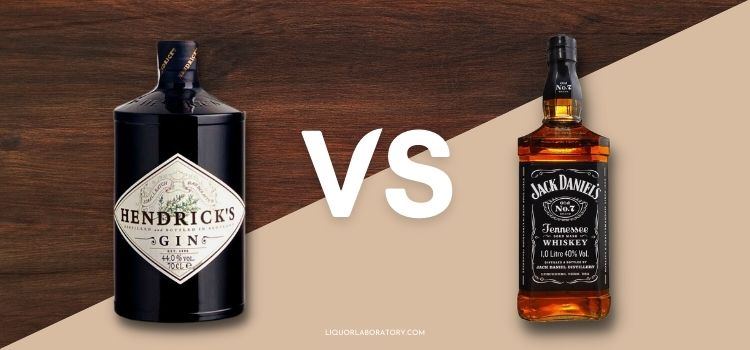
Gin and whiskey share a US 40% floor and almost nothing else. Gin is a juniper-flavored distilled spirit. Whiskey is a grain distillate stored in oak (corn whiskey excepted). A 1.5-ounce 80-proof pour is one NIAAA standard drink. Many US gins sit higher (Tanqueray 47.3%, Bombay 47%, Hendrick’s commonly 44%), so the same jigger is more ethanol.
Oak-mellowed gin (Seagram’s Extra Dry) is still gin, not whiskey. Related: gin vs vodka, whiskey, Seagram’s gin.
The legal split
| Rule | Gin | Whiskey |
|---|---|---|
| Flavor identity | Juniper must predominate | Grain + oak (type-dependent) |
| Barrel | Not required (Seagram’s rest is a style) | Oak, except corn whiskey |
| US floor | 40% | 40% |
| Place words | London Dry is a style | Scotch / bourbon / Irish are legal places or types |
| Age statement | Rare; not the class | Common; “straight” has a clock |
A 750 mL 40% bottle is about 17 drinks; at 47% about 20. Four 80-proof pours are four drinks. NIAAA binge pattern is a health line, not a target. Pour math: whiskey drinks. G&T: gin for a G&T.
More in our Whiskey Guide.
Sources
- TTB gin identity; 27 CFR 5.143 whisky.
- US gin ABVs from brand footers (Tanqueray 47.3%; Bombay commonly 47%). NIAAA (December 2025).
- (27 CFR 5.143)