Updated September 2026 by Lydia Martin
The best bourbon for an Old Fashioned is bottled between 90 and 100 proof with rye in the mash bill. That one sentence eliminates most of the bourbon aisle and explains every recommendation below.
Why the rule exists
An Old Fashioned is a small drink with nowhere to hide. Two ounces of whiskey, a quarter ounce of sugar, a couple of dashes of bitters, and about 20 to 25% water from stirring. There is no juice, no mixer, no dairy. Whatever the bourbon does, you will taste.
That cuts both ways.
Proof matters because the drink is sweetened and diluted. An 80-proof bourbon that tastes rich neat arrives soft and vague after sugar and stirring. At 90 to 100, it holds its shape.
Rye matters because bourbon is already sweet. Bourbon is legally a minimum 51% corn, and corn brings sweetness. Add sugar to that and you can end up with a drink that is all sweetness and oak with no spine. Rye in the flavoring-grain slot supplies pepper and dry spice, and that is what gives the drink structure.
Wheated bourbons — Maker's Mark, Weller — do the opposite. They are softer by design, which makes them lovely neat and a bit shapeless here.
The three-part test
Apply this to bottles you already own before buying anything:
- Proof: 90–100. Below 90 it fades; above 107 you need to change the build.
- Flavoring grain: rye, ideally in double digits. "High rye" on the label or the distillery's site is a strong signal.
- Oak: moderate. Heavily oaked and double-oaked bourbons stack tannin on top of the bitters and finish drying rather than rich.
A bourbon that passes all three makes a good Old Fashioned even if it is inexpensive. A bourbon that fails on proof makes a mediocre one even at $200.
Nine bottles that pass
Organized by what you want, not ranked. There is no single best bottle here and any page claiming otherwise is guessing for you.
High rye — closest to the drink's origins
- Old Grand-Dad Bonded, 100 proof. Roughly 27% rye and bottled-in-bond, which guarantees 100 proof by law. The most rye-forward mainstream bourbon widely available, and among the cheapest bottles on this page. If you make one purchase from this list, make it this one.
- Four Roses Small Batch, 90 proof. Blends two mash bills, one at 35% rye. Stone fruit and spice at once — an unusual combination that works particularly well against orange oil.
- Wild Turkey 101, 101 proof. The bar workhorse. Assertive and slightly funky, and impossible to lose in a drink.
Balanced — rich without going soft
- Buffalo Trace, 90 proof. The safe answer, and correct when you are making drinks for people whose taste you don't know.
- Woodford Reserve, 90.4 proof. Fruit-forward with a clean finish. Makes a polished, restaurant-style Old Fashioned.
- Elijah Craig Small Batch, 94 proof. Vanilla and toasted oak, with the vanilla leading. Excellent with a demerara syrup build.
Value — bonded bourbon is the shortcut
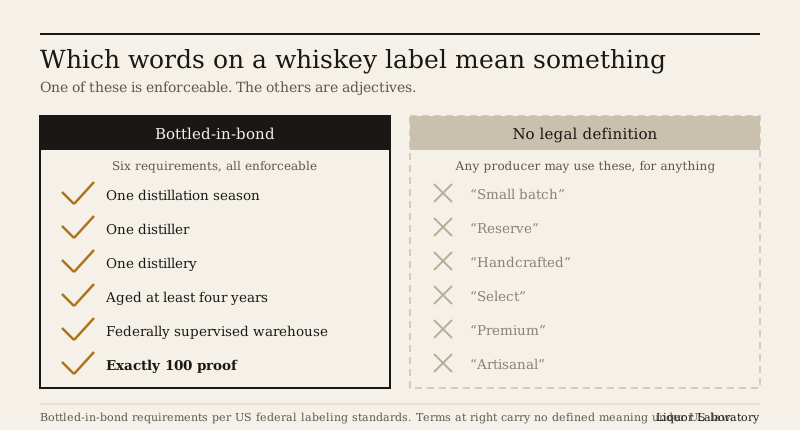
- Evan Williams Bottled-in-Bond, 100 proof. Bottled-in-bond means 100 proof by law, from one distillation season and one distiller, aged at least four years in a federally supervised warehouse. That statute guarantees the exact variable this drink needs.
- Jim Beam Bottled-in-Bond, 100 proof. Same guarantee, different house character.
Bigger, for a heavier drink
- Knob Creek 9 Year, 100 proof. More oak and more weight, carried by the proof. The pick for a darker, richer Old Fashioned in cold weather.
What to leave alone. Flavored whiskeys — the drink has sugar already. Double-oaked bourbons, whose tannin turns astringent. And allocated bottles: a Weller or a Pappy makes a fine Old Fashioned and so does a $25 bottle of Evan Williams Bonded, and you will not reliably taste the difference through sugar, bitters and dilution.
Adjust the build to the proof
| Bourbon proof | Syrup | Stir time |
|---|---|---|
| 80–86 | ¼ oz | 25 sec |
| 90–100 | ¼ oz | 30 sec — the standard |
| 101–107 | ¼ oz | 35 sec |
| 110+ (cask strength) | ⅓ oz | 45 sec |
The principle is that you are balancing alcohol, sugar and water. Raise the proof and you need more of the other two. A longer stir is simply the water adjustment expressed through time rather than volume.
Sugar, and the upgrade worth making
Demerara syrup, 1:1, is the single best improvement available to a bourbon Old Fashioned. Demerara carries molasses depth that white sugar does not, and it meets bourbon's caramel and vanilla directly rather than sitting on top of them.
Make it once: equal parts demerara sugar and hot water, stirred until clear, refrigerated. It keeps for weeks.
Maple syrup is the seasonal alternative and it is genuinely good from October through February.
The build
- 2 oz bourbon, 90–100 proof
- ¼ oz demerara syrup (1:1)
- 2 dashes Angostura bitters
- Orange peel
Combine in a mixing glass, fill with ice, stir 30 seconds, strain over one large cube. Express the orange peel skin-side down over the surface, then drop it in.
No muddled fruit. That practice arrived around Prohibition, plausibly to mask poor bootleg whiskey, and it is a different drink.
More in our Bourbon Guide.
Frequently asked questions
What bourbon is best for an Old Fashioned?
A 90 to 100 proof bourbon with rye in the mash bill. Old Grand-Dad Bonded and Four Roses Small Batch are the two best-value picks.
Can I use Maker's Mark in an Old Fashioned?
Yes, but it is wheated rather than high-rye, so the drink comes out softer. Use two full dashes of bitters to restore the spice the mash bill does not supply.
What proof bourbon for an Old Fashioned?
90 to 100 for a standard build. Higher proof works with a longer stir and slightly more syrup.
Should I use expensive bourbon in an Old Fashioned?
No. Sugar, bitters and dilution flatten the nuance you pay extra for. Buy well at the $22–$35 tier.
Simple syrup or sugar cube?
Demerara syrup, ideally. It dissolves reliably and its molasses depth suits bourbon better than white sugar.
How is a bourbon Old Fashioned different from a rye one?
Bourbon gives a rounder, sweeter, more vanilla-forward drink. Rye gives a drier, spicier one with more structure against the sugar.
The same proof-and-rye logic that structures an Old Fashioned is why a high-rye bourbon (or rye itself) is the classic call in a Manhattan.
Sources and method
Proofs are the standard US bottling strengths as printed on current labels. Bourbon mash bill minimums and bottled-in-bond requirements reflect US federal standards of identity. No prices or ratings are invented on this page.