Updated November 2026
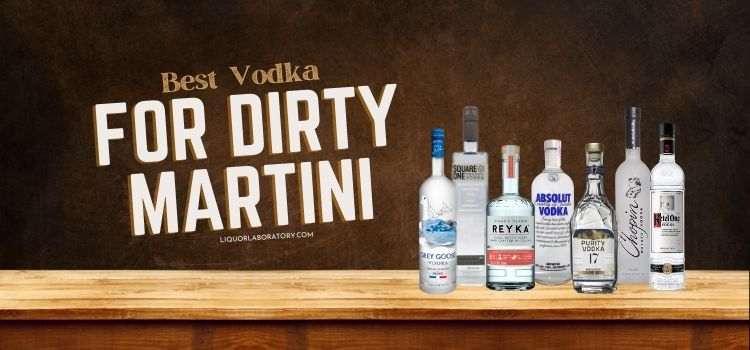
The best vodka for a dirty martini is a clean, 80 proof (40% ABV) bottle whose base suits the texture you like: a wheat vodka such as Grey Goose or Ketel One for a soft, round drink; a corn vodka such as Tito’s for a slightly sweet, smooth one; or a rye vodka such as Belvedere for more grip and spice against the salty brine. Because olive brine dominates a dirty martini, a well-made mid-shelf vodka performs as well as an expensive one. No industry body ranks vodkas for this drink, so choose by style and taste.
This guide explains what the vodka label tells you, how the base grain changes the drink, a reliable dirty martini build and how strong one is. For olive choices, see our guide to the best olives for a martini.
What the vodka label actually tells you
Under US rules, vodka is neutral spirits that may contain up to 2 grams per liter of sugar and up to 1 gram per liter of citric acid (27 CFR § 5.142). It may not be aged in wood, and adding other flavors turns it into flavored vodka. Bottled vodka must be at least 40% ABV (80 proof). A vodka filtered through at least one ounce of activated carbon or charcoal per 100 wine gallons may say “charcoal filtered” on the label.
In practice, that means two unflavored vodkas at the same proof differ mainly in base ingredient, distillation and filtration. Those differences show up most when the drink is mostly vodka, as a martini is. Our page on whether vodka is made from potatoes covers the full range of base materials.
Vodkas to try, by style
Every bottle below is 40% ABV in the US. Descriptions come from the producers and US retail listings, not from a tasting panel.
Grey Goose (wheat, France)
Made from French soft winter wheat and Gensac spring water from the Cognac region. The brand describes the nose as “delicate and floral,” the palate as “sweet and round” and the finish as “bold and toffee.” That roundness softens the salt of the brine. More on the brand in who owns Grey Goose.
Ketel One (wheat, Netherlands)
Made by the Nolet family distillery in Schiedam from 100% non-GMO European wheat, distilled in copper pot stills and filtered over loose charcoal, according to the brand’s US retail listing. Expect a crisp, neutral profile that lets a good olive brine lead.
Tito’s Handmade Vodka (corn, Texas)
Distilled from corn in Austin, Texas, in pot stills. Corn vodkas often read slightly sweet, which balances a briny, “extra dirty” pour. Tito’s is also easy to find nearly everywhere in the US. See our Tito’s mixers page for other drinks.
Belvedere (rye, Poland)
Made from Polish Dankowskie Gold Rye and quad-distilled. Rye vodkas tend to have a peppery edge and a fuller body, which stands up to a large measure of brine. Good if you find wheat vodkas too soft.
How to compare at home
Buy small bottles of two styles, chill them in the freezer, and make the same recipe twice. Taste them side by side before adding brine, then after. The difference is often smaller than marketing suggests, which is useful to know before you spend more.
A reliable dirty martini build
The International Bartenders Association no longer lists the Dirty Martini on its cocktail list. Its current Dry Martini spec is 60 ml gin and 10 ml dry vermouth, stirred with ice and strained into a chilled glass, with a lemon twist or an olive. A vodka dirty martini is a house variation on that template:
- 2.5 oz vodka, very cold
- 0.5 oz dry vermouth
- 0.25 to 0.5 oz olive brine (more for “extra dirty”)
- Garnish: 1 to 3 olives on a pick
Stir with plenty of ice for about 30 seconds, then strain into a chilled coupe or martini glass. Stirring keeps the texture silky; shaking makes it colder and slightly cloudy, which some drinkers prefer. If you want the gin version, our Gin Guide explains styles, and our page on what a dirty martini tastes like describes the flavor.
How strong is a dirty martini?
Olive brine contains no alcohol, so the strength comes from the vodka and vermouth. 2.5 oz of 40% vodka holds 1 oz of pure alcohol, which is about 1.7 US standard drinks (one standard drink is 0.6 oz of alcohol). The vermouth adds a little more. A dirty martini is therefore closer to two drinks than one. For vodka strength comparisons, see how many shots of vodka it takes to get drunk, and never drive after drinking.
For a lighter, fruit-forward vodka drink, our guide to the best vodka for a screwdriver takes a different approach.
Frequently asked questions
Is a dirty martini better with vodka or gin?
Both are correct. The classic martini is gin, and the IBA spec uses gin. Vodka gives a cleaner canvas that puts the olive brine in front; gin adds juniper and botanicals.
Does an expensive vodka make a better dirty martini?
Not necessarily. Brine is a strong flavor, so it masks subtle differences. Pick a clean 80 proof vodka you like neat, then spend the difference on good olives.
Should a dirty martini be shaken or stirred?
Stirring gives a clear, silky drink. Shaking gives a colder, slightly cloudy one with tiny ice shards. Both are common; it is a matter of preference.
What is the best brine for a dirty martini?
Brine from a jar of olives you enjoy eating works best. Bottled “martini brine” products also exist. Avoid brine from heavily spiced or stuffed olives unless you want that flavor.
Can I keep vodka in the freezer?
Yes. An 80 proof vodka will not freeze solid in a home freezer, and starting cold means less dilution when you stir.
Sources
- 27 CFR § 5.142, standards of identity for neutral spirits and vodka (Cornell LII, eCFR).
- International Bartenders Association, Dry Martini specification; IBA list history (Dirty Martini removed).
- Grey Goose brand page (40% ABV, soft winter wheat, Gensac spring water, tasting notes).
- QFC (Kroger) listing for Ketel One Vodka (80 proof, non-GMO European wheat, copper pot stills); Wikipedia, Ketel One (Nolet Distillery, Schiedam).
- Caskers and Ralphs listings for Tito’s Handmade Vodka (40% ABV, corn, Austin, Texas).
- Total Wine listing for Belvedere (Polish Dankowskie Gold Rye, 40% ABV).
- NIAAA, “What Is a Standard Drink?”