Updated July 2026.
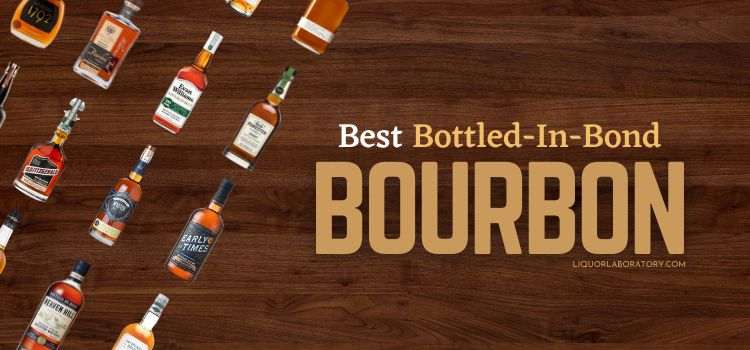
Bottled in bond is a federal class, not a flavor ranking. Under the spirit must be 100 proof (50% ABV), aged at least four years, produced at one distillery in one distillation season, and bottled at a bonded warehouse. A 1.5-ounce pour is 1.25 NIAAA standard drinks — 25% more ethanol than an 80-proof pour of the same size. This page is not a 2022 “best of” list and not a 2026 tasting.
The strip is on bourbon, rye, and other bonded classes. Heaven Hill’s Evan Williams Bottled-in-Bond, Beam’s Old Grand-Dad Bonded, and Brown-Forman’s Early Times Bottled-in-Bond are widely distributed examples of the class — not scores. Related: barrel proof, 100-proof whiskey, cheap bourbon.
What “bonded” actually requires
| Rule (5.88) | Number |
|---|---|
| Bottling proof | 100 (50% ABV) |
| Minimum age | 4 years |
| Distillery / season | One DSP; one season (Jan–Jun or Jul–Dec) |
| 1.5 oz drinks | 1.25 |
| 750 mL drinks | ≈21.1 |
Four bonded pours are five drinks. Barrel-proof is a different claim (whatever came out of that cask). NIAAA binge pattern is a health line, not a target. No invented MSRP or medals. Pour math: whiskey drinks.
More in our Bourbon Guide.
Sources
- 27 CFR 5.88 bottled in bond. 27 CFR 5.143 whisky types.
- Named BiB bottles are class examples from current US labels, not a ranking.
- NIAAA December 2025. No 2022 list reused.